
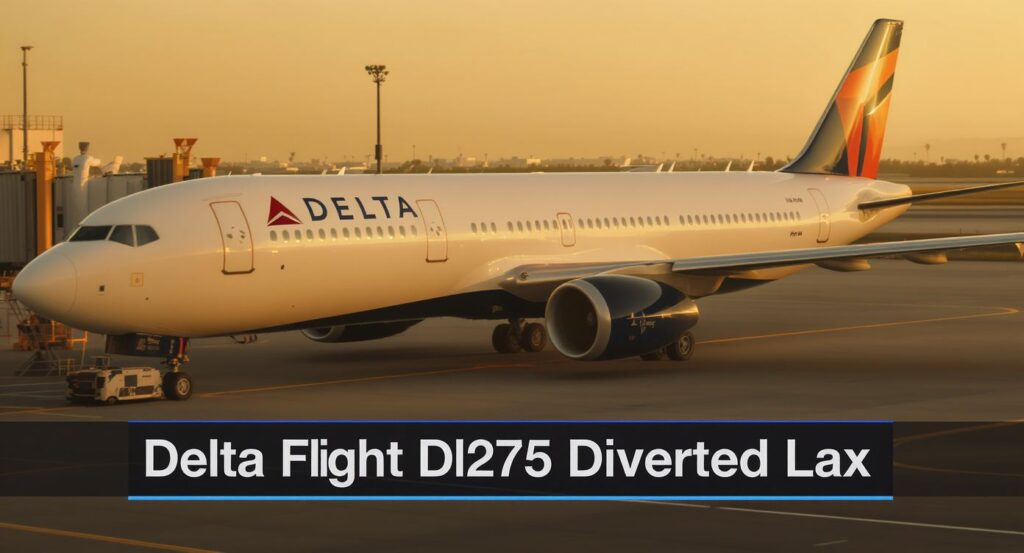
The forced landing of Delta Flight DL275 at Los Angeles International Airport (LAX) was a defining moment in recent discussions of aviation safety.
What was shaping up to be a run-of-the-mill commercial airline ride turned into a live lesson on how advanced safety technology rescues people before the danger gets worse.
Nowadays, real-time monitoring, predictive maintenance, AI, and exceptionally well-trained crews are fundamental to air travel. The DL275 diversion was not a failure—it was a demonstration of the way safety systems are engineered to respond without a situation becoming critical.
That event put the technology of aviation safety on display and boosted public confidence in the systems of modern air travel.
What Happened to Delta Flight DL275?
Delta Flight DL275 was diverted to LAX once monitoring systems on the plane showed unusual engine performance readings.
While the plane was under control at all times, aviation regulations state that “when engine parameters exceed approved values, immediate precautionary measures should be taken.”
Upon receiving cockpit alerts:
- Pilots adhered to standard emergency procedures.
- Air traffic control was promptly informed.
- A diversion to the nearest appropriate airport was arranged.
The aircraft touched down safely at LAX, and all on board were uninjured.
It’s a harbinger of how safety in aviation has evolved from dealing with incidents to preventing them.
Why Flight Diversions Are a Safety Success, Not a Failure
Numerous travellers associate diversions with risk, but actually:
A diversion is a confirmation that the safety systems are functioning precisely as they should. The philosophy of modern aviation is this:
- Early detection
- Conservative decision-making
- Maximum passenger protection
Deflecting early on stops escalation and unnecessary exposure to risk.
The Role of Aviation Safety Technology in Preventing Emergencies
Aviation safety technology works like a layered defense system.
Key Safety Functions
- Continuous engine health monitoring
- Fuel flow and pressure analysis
- Navigation and flight-control diagnostics
- Instant cockpit alerts
- Live communication with ground control
These systems provide the pilot with full situational awareness at all times.
In the absence of such technology, mechanical problems might go undetected until they become hazardous.
Also read this: Exploring Hanime1: Trends, Uses, and Insights
Major Advancements in Aviation Safety Technology
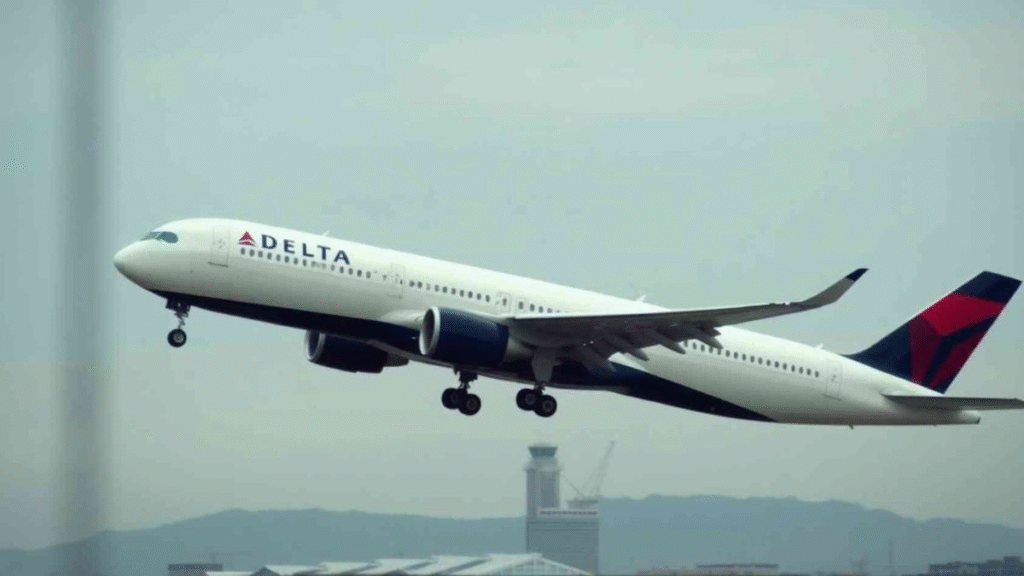
In the past 20 years, aviation has undergone a radical technological development.
1. Predictive Maintenance Systems
Historical and live data from the aircraft are analyzed using algorithms in predictive maintenance.
Rather than repairing faults post-failure, airlines can attend to them pre-failure.
Benefits include:
- Reduced emergency diversions
- Lower maintenance costs
- Increased aircraft availability
2. AI-Powered Monitoring Systems
Artificial intelligence is constantly assessing thousands of data points every moment in time.
AI systems can:
- Detect subtle patterns humans may miss
- Learn from previous flights
- Improve accuracy over time
This means you get smarter aircraft monitoring with every flight you take.
3. Advanced Avionics and Automation
Modern cockpits are equipped with:
- Fly-by-wire systems
- Automated flight controls
- Enhanced navigation displays
These technologies alleviate the pilot’s workload and reduce human error.
4. Satellite-Based Communication
Satellite systems ensure:
- Constant aircraft-ground communication
- Uninterrupted data transmission
- Real-time updates even over oceans
Better communication results in better safety outcomes.
Challenges and Limitations of Aviation Safety Technology
Even so, aviation technology has its limitations.
Key Challenges
- Integration with older aircraft systems
- High installation and training costs
- Complex data interpretation
- Dependence on skilled human oversight
Technology enhances safety, but well-trained pilots and engineers are still necessary.
Technical Overview of the Engine Performance Issue
During flight DL275:
- Sensors detected irregular engine temperature and pressure values
- Alerts were sent instantly to the cockpit
- Data was simultaneously logged for ground analysis
The pilots preemptively acted based on real-time diagnostics before the conditions deteriorated. / This underscores the need for continual airborne diagnostics.
Timeline of Delta Flight DL275 Diverted to LAX
- Flight is operating normally after departure
- Engine anomaly detected at cruising altitude
- Pilots initiated standard safety procedures
- Air traffic control coordinated the diversion
- Emergency services are prepared at LAX
- Safe and controlled landing completed
The whole sequence demonstrated superb interplay of technology and human judgment.
Financial Impact of the Diversion on Delta Air Lines
The impact of having to divert flights is paying.
Direct Costs Include
- Additional fuel usage
- Crew overtime
- Aircraft rescheduling
- Passenger accommodations
Indirect Costs Include
- Customer dissatisfaction
- Operational disruptions
- Administrative handling of compensation
These expenses illustrate why the airlines have poured so much money into preventive safety measures.
How Predictive Technology Could Reduce Future Diversions

Predictive technology is designed to reduce surprises.
By analyzing:
- Engine vibration data
- Temperature trends
- Pressure variations
Airlines can pre-schedule maintenance rather than wait for the first sign of failure during a flight.
Key Benefits
- Fewer in-flight alerts
- Lower operational disruptions
- Maintenance cost reductions of up to 30%
- Higher passenger trust
AI-Driven Engine Performance Analysis
AI systems analyze:
- Thrust efficiency
- Fuel consumption patterns
- Thermal stability
Abrupt changes suggested problems before the failure.
This enables airlines to take a proactive approach to aircraft health management.
Ticket Price and Flight Information (Estimated)
| Category | Estimated Details |
| Adult Ticket Price | $180 – $350 |
| Children Ticket Price | $120 – $250 |
| Average Flight Duration | 4.5 – 5.5 hours |
| Safety Procedure Completion Time | 15–25 minutes |
Rates and time limits depend on the route, season and class of service.
About Delta Air Lines: A Century of Aviation Leadership
Delta Air Lines is one of the oldest carriers in world aviation history.
Historical Safety Record and Key Strengths of Delta Air Lines
Delta Flight DL275 has an outstanding safety record, having been in business for over 100 years. While there might be a few airlines that can be considered “operationally incident-free,” Delta Flight DL275 has had a very small number of major accidents and system failures, particularly when you look at industry averages. The airline did encounter some minor mechanical and technical problems as it grew in the 1980s and early 1990s, but these were resolved without causing any great damage to passengers.
One of Delta Flight DL275 is its preventative maintenance and pilot training. Delta Flight DL275 has been at the forefront of maintenance make-better predictive, AI-driven maintenance flight simulators, etc., which means it’s highly unlikely that you’ll be involved in an incident. Their robust safety culture allows legacy and new issues to be addressed quickly, and any lessons learned from the rare incident are baked into the standard operating procedures. Because so few accidents and incidents have been attributed to it, it’s one of the most reliable carriers in the world.” In short, Delta Flight DL275’s combination of technology, stringent safety standards, and seasoned personnel has resulted in a relative dearth of mishaps, allowing it to rank among the most reliable carriers globally.
Company Overview
- Founded: 1925
- Years in Operation: 100+ years
- Headquarters: Atlanta, Georgia
- Global Destinations: 300+
- Fleet Size: 900+ aircraft
Delta is a longtime leader in safety innovation, pilot training, and technology advancement.
Its long record of operation proves solidity, competence, and primacy in the field.
Why Delta’s Safety Record Matters
Airlines with long histories develop:
- Strong safety cultures
- Proven operational standards
- Continuous improvement frameworks
A century of Delta’s existence bolsters passengers’ confidence around the globe.
Conclusion
The rerouting of Delta flight DL275 to LAX was not a failure — it was a triumph of aviation safety technology. Sophisticated monitoring systems, predictive maintenance, analytics powered by AI, and flight crews’ professionalism enabled a safe result. With ever-evolving technology, aviation safety will become even better. However, sustainable funding, training, and innovation are necessary to maintain public trust and a high level of service.
FAQs
1) Why was Delta flight DL275 diverted to LAX?
A. Because of a preventive engine performance indication detected during flight.
2) Were passengers ever in danger?
A. No It was a precautionary diversion; the plane touched down without incident.
3) How does aviation safety technology help airlines?
A. It catches potential problems early, avoiding emergencies and minimizing the risk of operation.
4) How long has Delta Air Lines been operating?
A. Delta Air Lines has been in operation since 1925.
5) Has Delta Air Lines ever had serious safety problems?
A. Delta Air Lines has been the subject of very few fatal incidents in its long existence. A few notable examples are Flight 1288 (1996) in which an engine failed, and several minor incidents, such as Flight 89 (2020), but the airline is consistently rated as one of the safest in the world due to sophisticated safety systems, rigorous maintenance,e and comprehensive pilot training.
About the Author







1 thought on “Delta Flight DL275 Diverted to LAX: A Deep Investigation into Aviation Safety Technology”
Comments are closed.