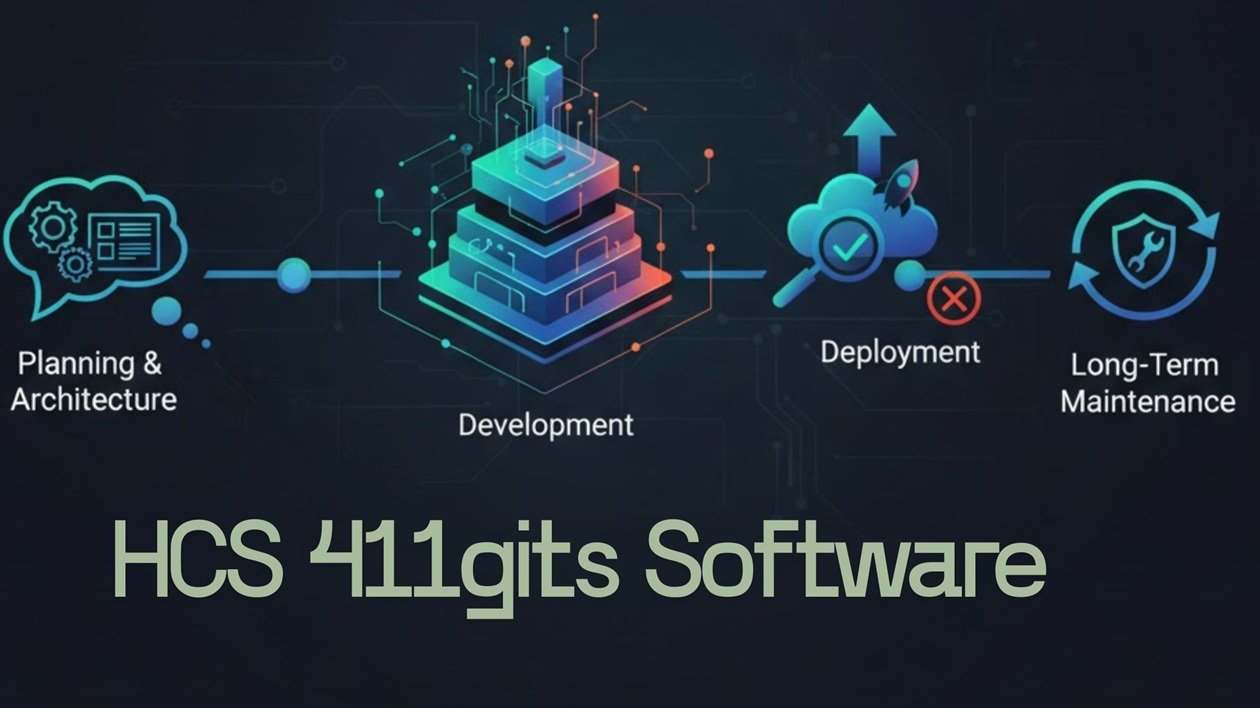
HCS 411GITS Software development becomes far more complex when it intersects with healthcare and global information systems. In this kind of environment, applications are not developed just because they are convenient or fast. They are constructed to be accurate, secure, and long-lasting. At this point, the HCS 411GITS framework comes in. It is a common problem among students and people who are still in the early stages of developing systems to learn how the real-world systems are organized beyond the writing of the code. The concept of how HCS 411gits software built helps bridge that gap, suggesting the development as a process that is disciplined and step-by-step as opposed to being a trial-and-error activity.
What Is HCS 411GITS Software?
HCS 411GITS software is a type of academic and technical framework applied in the perception of how structured software systems are created in healthcare and global information technology environments. It concentrates on the development of secure systems that are reliable and fit in the regulated industries. The software assists students and young professionals to get acquainted with the real-life development experience, such as planning, design, testing, and maintenance, without making the data security and system stability less significant.
How HCS 411GITS Software Built Starts With Clear Planning

The basis of any successful HCS 411GITS software project is planning. Developers and stakeholders agree on objectives, the limits of a system, and expected results before any technical work is developed.
In systems that are health-related, poor planning may result in severe functional shortcomings. Thus, planning is emphasized on what the software should do and what it must not do. This step eliminates unnecessary features and lowers the rework.
By the developers knowing how hcs 411gits software built through some structured planning, the later developers know that they are on a straight path and so the next stage to follow.
Role of Requirement Analysis in How HCS 411GITS Software Built
Requirement analysis converts the ideas into written expectations. The phase entails seeking involvement of all the concerned parties such as administrators, technical forces, and domain specialists.
Rather than taking things as they are, developers meticulously record workflows, user roles and system constraints. This will make sure that the software is not based on assumptions but on real-life usages.
System Design Phase in How HCS 411GITS Software Built
Requirements get structured through system design. It outlines the manner in which the various constituents are going to interact as well as the flow of data within the system. This stage makes sure that the software is maintainable, scalable and secure.
Core Design Components
| Design Area | Explanation |
| Database Design | Ensures secure and structured data storage |
| User Interface Design | Reduces operational errors through clarity |
| Technology Stack | Supports scalability and long-term support |
These are database models, interface layouts, and technology choices. The emphasis in healthcare systems is on simplicity and clarity rather than visual complexity. The powerful design stage is used to guarantee that the software developed by hcs 411gits is not rigid to the requirements of the system.
Software Development Lifecycle Used in How HCS 411GITS Software Built
The Software Development Lifecycle or SDLC is a guide to the project. The phases are based on the preceding phase in order to provide consistency and quality. The HCS 411GITS systems strictly follow the lifecycle to prevent any loopholes in testing, documentation, or deployment. This sequence of steps enables teams to cope with complexity without losing control.
HCS 411GITS Development Lifecycle Overview
| Phase | Purpose |
| Planning | Define scope and objectives |
| Analysis | Collect and validate requirements |
| Design | Create system architecture |
| Development | Implement approved designs |
| Testing | Identify and resolve issues |
| Deployment | Release controlled versions |
| Maintenance | Improve and update system |
This lifecycle defines how hcs 411gits software built in a predictable and repeatable way.
Development Uses Controlled and Incremental Methods
In the development stage, the developers code the actual code depending on approved designs. Development does not occur simultaneously in HCS 411GITS. On the contrary, the work is broken into smaller, manageable portions. The frequent application of Agile methods of development is explained by the possibility of incremental improvements and feedback.
Features are not developed, reviewed, and refined at the end, but in short cycles. This minimizes mistakes and increases flexibility. This will make sure that the software developed by hcs 411gits is adaptable without compromise to control.
Importance of CI/CD in How HCS 411GITS Software Built
Continuous Integration and Continuous Deployment are essential in the process of ensuring the quality of a software. The new code changes are tested and validated with automated pipelines before deployment. This will minimize human error and make sure that the updates will not affect the stability of the system.
In healthcare-related systems, this level of automation provides reliability and consistency. Using CI/CD strengthens how hcs 411gits software built by enforcing disciplined development and deployment practices.
Testing Is Critical in Healthcare-Oriented Software
The testing in HCS 411GITS software is considered as an essential task but not the last one. Since the software will be supportive of healthcare related tasks, mistakes made should be detected at the earliest stage and eradicated.
Common Types of Testing Used
- Unit testing to verify individual code components
- Integration testing to ensure modules work together
- Security testing to identify vulnerabilities
- Usability testing to reduce user mistakes
Thorough testing protects both users and organizations. This is a non-negotiable part of how hcs 411gits software built.
Security and Compliance in How HCS 411GITS Software Built
The issue of security is applied throughout the development stages. Early implementations are made on access controls, encryption mechanisms, and audit mechanisms. The systems that are related to the health sector are obligated to comply with data protection standards. Developers make sure that confidential data is secured during its lifecycle. This proactive approach defines how hcs 411gits software built to meet both technical and regulatory expectations.
Documentation Practices in How HCS 411GITS Software Built
The documentation is used to sustain long-term system. It enables prospective developers and users of the system to know what the system behaves like without necessarily having to depend on the original developers.
Types of Documentation Maintained
| Documentation Type | Purpose |
| Technical Documentation | Explains architecture and code logic |
| User Documentation | Guides system usage |
| Compliance Records | Demonstrates regulatory adherence |
In HCS 411GITS projects, documentation is treated as a core deliverable rather than an optional task. It ensures continuity, transparency, and compliance. Clear documentation strengthens how hcs 411gits software built for long-term use.
Building Scalable Systems in HCS 411GITS Software
Scalability is to do with the software remaining useful in the case of an increase in the volume of data and user demand. The principles of the modular design enable single components to be updated separately. This will minimize the downtime of the system and make future upgrades easier. Scalability planning is important because the software will be scalable to technological developments. One of the reasons why hcs 411gits software can be relevant today is scalability planning.
Common Challenges in HCS 411GITS Software is Built
There are non-coding challenges associated with the development of structured software in healthcare and international IT settings. Complexity, pressure to comply and changing requirements typically create these challenges. The early knowledge of them prevents unnecessary expenses by the teams.
1. Managing Changing Requirements During Development
Requirement changes come in a lot of times when the stakeholders come to the realization in the middle of the project. Any change in the healthcare-related systems may affect several modules. Flexibility does not mean that developers do not need to control them to prevent the destabilization of the system.
2. Maintaining Security Without Slowing Progress
Security requirements are also tight, yet, over the controls may be prohibitive. Groups should build protection measures in slow increments instead of treating them as a last resort. It is a balance that makes things safe and does not slow down the progress.
3. Coordinating Between Technical and Non-Technical Teams
Lack of communication between the developers and the domain experts may result in wrong system behavior. A well-documented process and periodic reviews will aid in harmonizing expectations among the teams. Regular communication minimizes redundancy.
4. Ensuring Long-Term Maintainability
Temporary solutions usually lead to permanent problems. Systems that are not developed in a modular fashion are hard to upgrade. Maintenance design also helps to avoid the accumulation of technical debt as time passes.
Conclusion
Understanding how hcs 411gits software built provides more than technical knowledge. It imparts orderly thinking, responsibility and planning. This will make software secure, responsive and reliable within a healthcare-oriented setting. Using this framework, developers create systems that survive regulatory pressure and technology change. Through the respect of each stage of development, teams can be guaranteed that the value of the hcs 411gits software built will remain valuable in the long term.
Also read More Information: Games: Trends, Uses, and Insights
About the Author